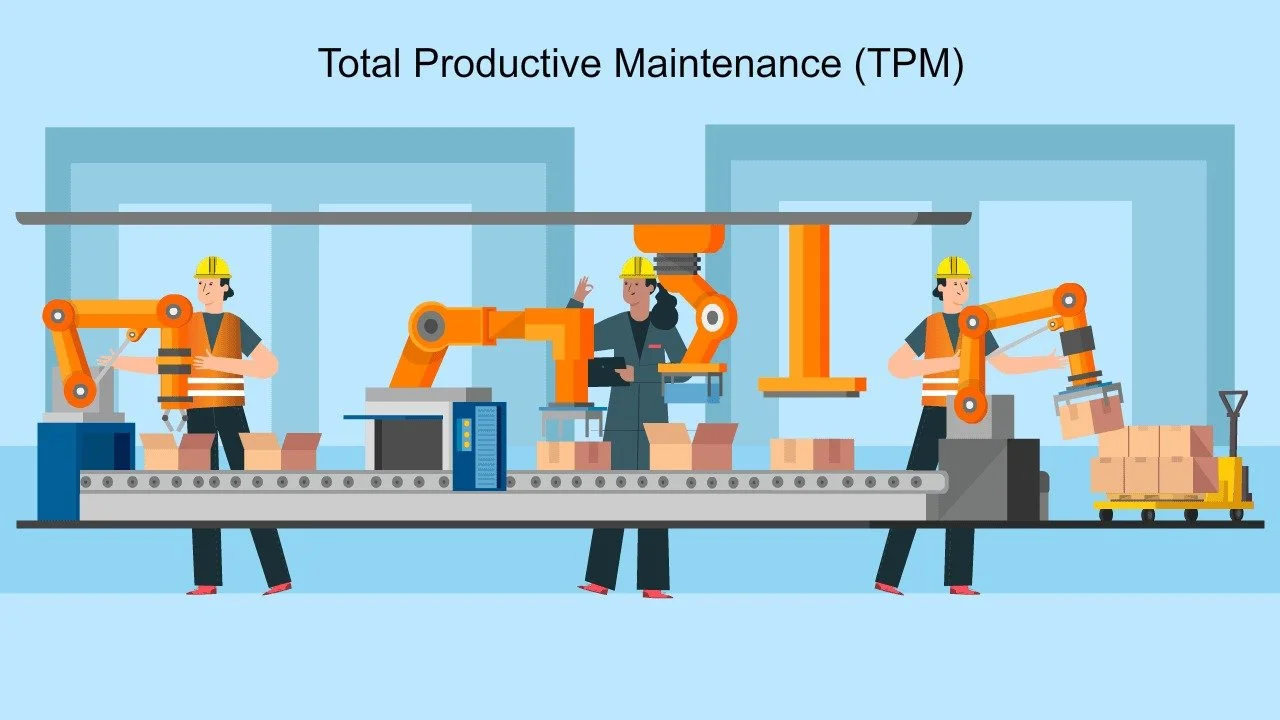
In today’s competitive industrial world, organizations can no longer afford unplanned downtime, low productivity, or frequent equipment breakdowns. To achieve operational excellence, many companies are now turning to Total Productive Maintenance (TPM) — a system designed to maximize equipment efficiency, reduce costs, and engage employees at all levels.
What is TPM?
Total Productive Maintenance (TPM) is a proactive maintenance approach that aims to achieve zero breakdowns, zero defects, and zero accidents. It focuses on involving everyone — from operators to managers — in maintaining and improving equipment performance.
Unlike traditional maintenance methods that react to problems after they occur, TPM emphasizes prevention, prediction, and continuous improvement.
With TPM vs Without TPM: A Clear Comparison
| Aspect | Without TPM | With TPM |
| Equipment Availability | Frequent breakdowns and unplanned downtime | High uptime and reliable operations |
| Productivity | Low efficiency and irregular output | Improved efficiency and stable production |
| Maintenance Cost | High due to reactive repairs | Reduced costs through proactive maintenance |
| Employee Engagement | Operators unaware of machine health | Operators take ownership of maintenance |
| Quality of Products | Higher defect rates | Consistent and improved product quality |
| Safety | Higher risk of accidents | Safer and cleaner workplace |
| Overall Equipment Effectiveness (OEE) | Low | High |
| Organizational Culture | Maintenance seen as an expense | Maintenance seen as a value-adding process |
Why Every Organization Needs TPM Training
Implementing TPM requires not just the right tools, but the right mindset and skills. TPM training helps your team understand and apply key techniques such as:
- Autonomous Maintenance: Empowering operators to perform basic maintenance tasks.
- Planned Maintenance: Scheduling maintenance to prevent failures before they occur.
- Focused Improvement: Using data to eliminate losses and inefficiencies.
- Training & Development: Building the knowledge and skill set of your workforce.
With proper TPM implementation, organizations experience:
- 30–50% reduction in unplanned downtime
- 20–40% increase in productivity
- Improved equipment lifespan
- Enhanced employee ownership and morale
Conclusion
Organizations that embrace Total Productive Maintenance move from a reactive approach to a proactive, improvement-driven culture. TPM not only optimizes machines but also transforms people and processes — leading to sustainable growth and competitiveness.
Empower your workforce. Improve your equipment. Transform your organization.